


Senior living marketing leaders are often overwhelmed by the pressure to generate qualified leads, manage complex tech stacks, and balance competing demands from ownership and sales teams.
This article explains why a strategy-first approach is critical for driving occupancy and avoiding wasted spend on disconnected tactics. We explore key industry stats on lead volume and nurture gaps, define popular marketing models (funnel, flywheel, bowtie, hourglass, and infinity loop), and explain why they don’t fully reflect the senior living customer journey.
Inspired by the sales concept of a Power Hour, we introduce a focused approach for senior living operators to dedicate time to marketing strategy. By applying a 90-day planning framework, senior living operators can cut through overwhelm and create actionable strategies that drive move-ins. Finally, we share how Smart Girl Digital’s Marketing Power Hour program helps operators quickly build a strategic plan they can actually execute.
Jump to the Good Stuff: Here’s What We Cover
- A strategy-first approach matters in senior living marketing
- The everyday struggles of senior living marketing leaders
- The difference between tactics and strategy
- Why modern marketing models miss the senior living customer journey
- Why 90-day action plans beat annual planning
- A step-by-step framework for building your next 90-day strategy
Importance of a Strategy-First Approach
In senior living marketing, the temptation is real: new ad platforms, shiny automation tools, and trending tactics show up in your inbox every single week. Everyone promises more clicks, more traffic, more move-ins. But here’s the truth—without a solid strategy, all those tactics are just noise.
A strategy-first approach gives you clarity. It ensures your marketing budget isn’t spread thin across every new idea that comes your way but instead drives toward one clear objective: filling your communities with the right residents.
At Smart Girl Digital, we’ve seen too many operators skip this step. The result? Teams get buried in execution, leaders feel stuck, and occupancy goals remain just out of reach. Strategy is the difference between running in circles and running the race to win.
Reality Check: Stats on Lead Volume & Nurturing Gaps
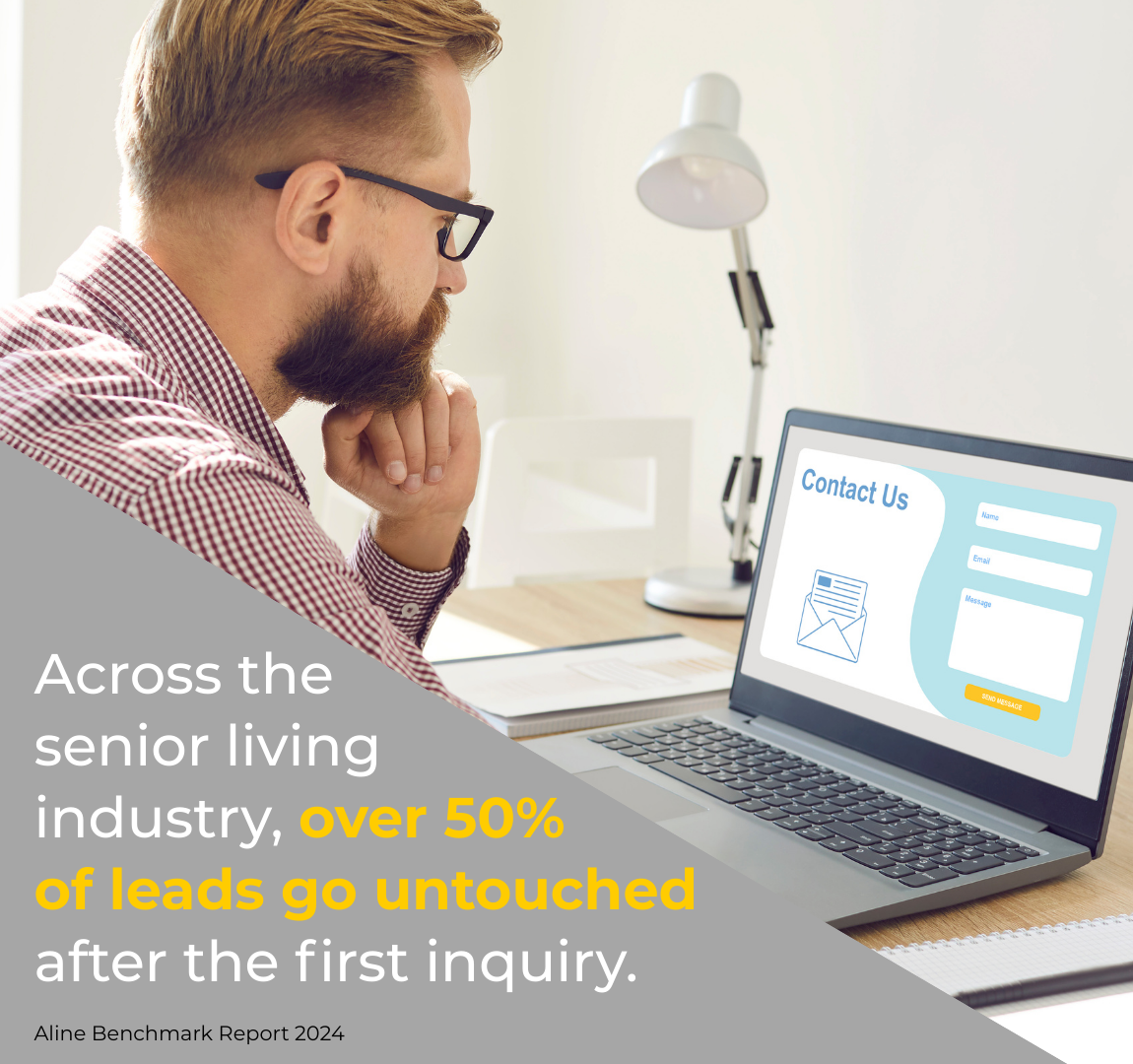
Let’s talk numbers. Across the senior living industry, over 50% of leads go untouched after the first inquiry (source: Aline Benchmark Report 2024). Even more alarming—only about 30% of operators have a defined nurture process for prospects already in their CRM.
That means the majority of potential residents are slipping through the cracks. Think about it: you’ve invested in ads, your website, SEO, maybe even direct mail—and when the leads come in, they’re left to sit cold in a database.
Operators don’t have a lead problem. They have a nurture problem.
Struggles of Marketing Leaders: Time, Tech & Tactics Overload
If you’re a marketing director or VP in senior living, chances are you’re balancing:
- Occupancy pressure from ownership.
- Constant requests from sales teams (“We need more leads now!”).
- A tech stack that looks like a puzzle someone dumped on the table without instructions.
- A calendar packed with back-to-back meetings, leaving no time for actual strategy work.
It’s no wonder many leaders feel stuck in “reaction mode.” Instead of setting the vision, you’re firefighting—chasing new tactics or drowning in reporting dashboards that don’t even connect to sales.
Tactics vs. Strategy
Here’s the kicker: tactics are not strategy.
- Running Google Ads is a tactic.
- Posting on Facebook is a tactic.
- Setting up a marketing automation sequence is a tactic.
Those things only work when they’re tied together by a strategy—one that defines your audience, clarifies your offer, chooses the right channels, and sets measurable goals.
Otherwise, you’re playing whack-a-mole with your marketing budget.
For larger operators, it is important to note that you need a Corporate Strategy before you execute Community Tactics. While the tactics can be adjusted to what works for each community, the guiding North Star of the organization’s marketing strategy should align at the corporate level.
Modern Marketing Models: Why They Miss the Senior Living Journey
Marketers love models. Funnel. Flywheel. Bowtie. Hourglass. Infinity Loop. They all look slick in a PowerPoint presentation.
Let’s take a quick look at each model.
Sub Heading
Sub Heading
Sub Heading
Sub Heading
Sub Heading
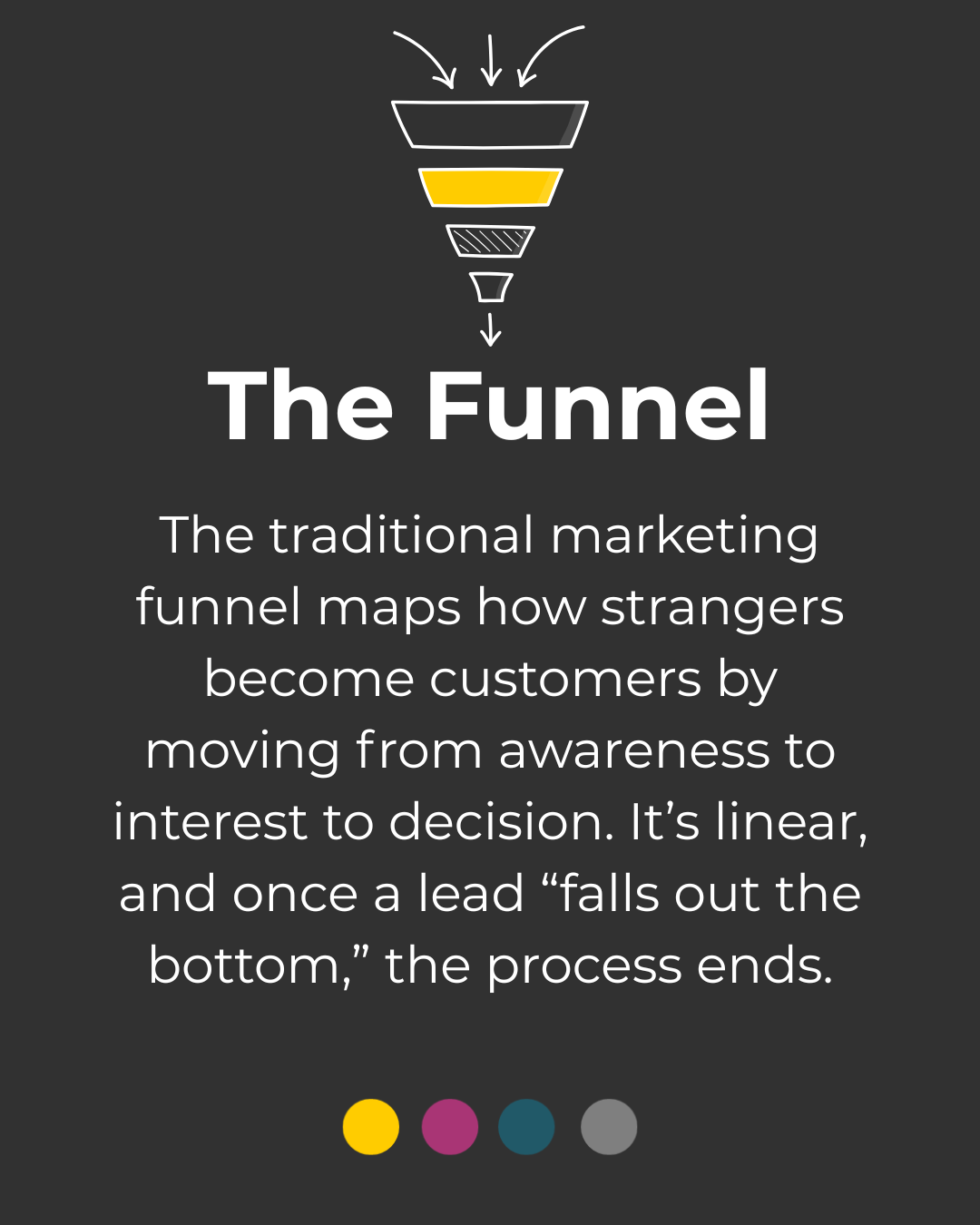
- The Funnel: The traditional marketing funnel maps how strangers become customers by moving from awareness to interest to decision. It’s linear, and once a lead “falls out the bottom,” the process ends.
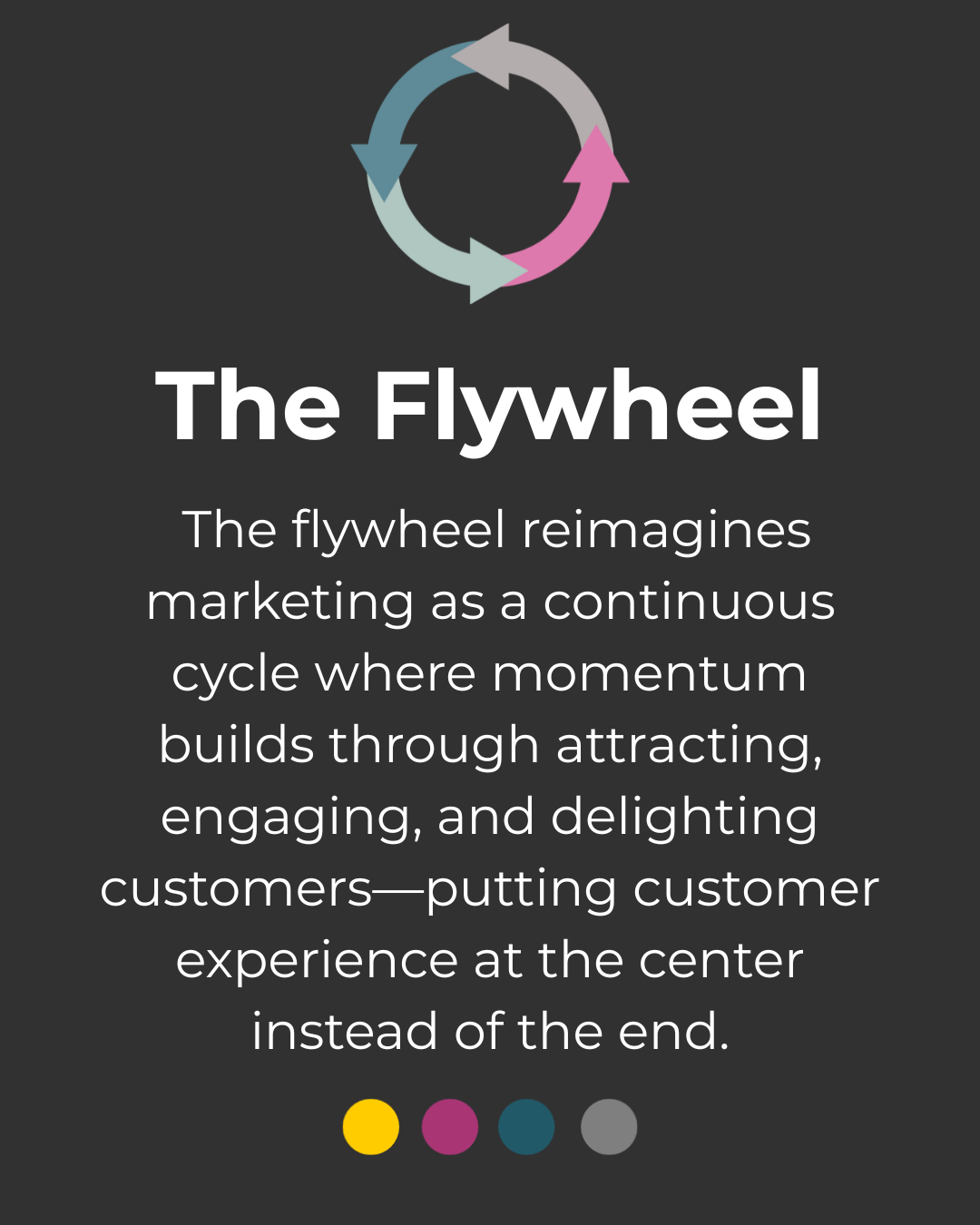
- The Flywheel: The flywheel reimagines marketing as a continuous cycle where momentum builds through attracting, engaging, and delighting customers—putting customer experience at the center instead of the end.
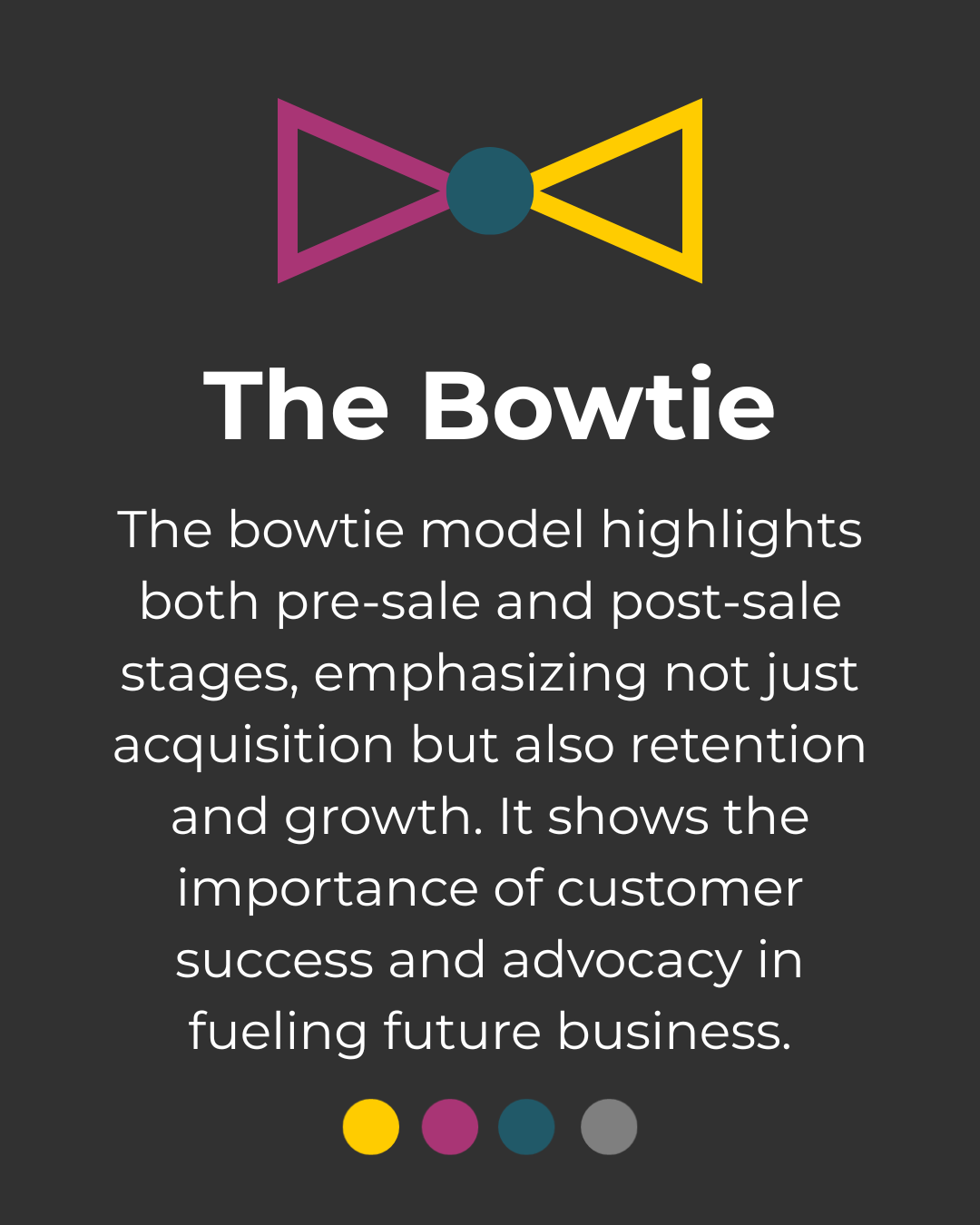
- The Bowtie: The bowtie model highlights both pre-sale and post-sale stages, emphasizing not just acquisition but also retention and growth. It shows the importance of customer success and advocacy in fueling future business.
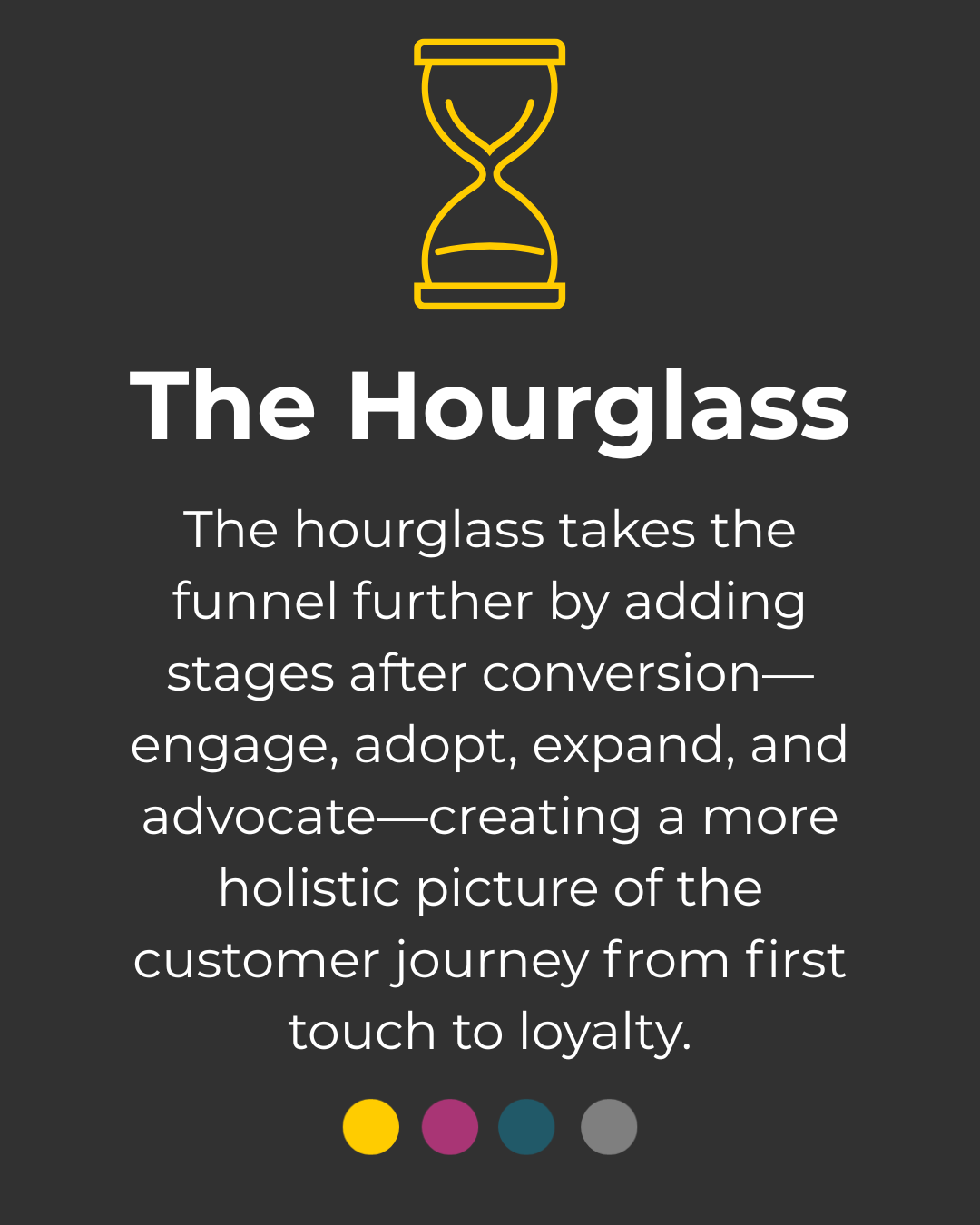
- The Hourglass: The hourglass takes the funnel further by adding stages after conversion—engage, adopt, expand, and advocate—creating a more holistic picture of the customer journey from first touch to loyalty.
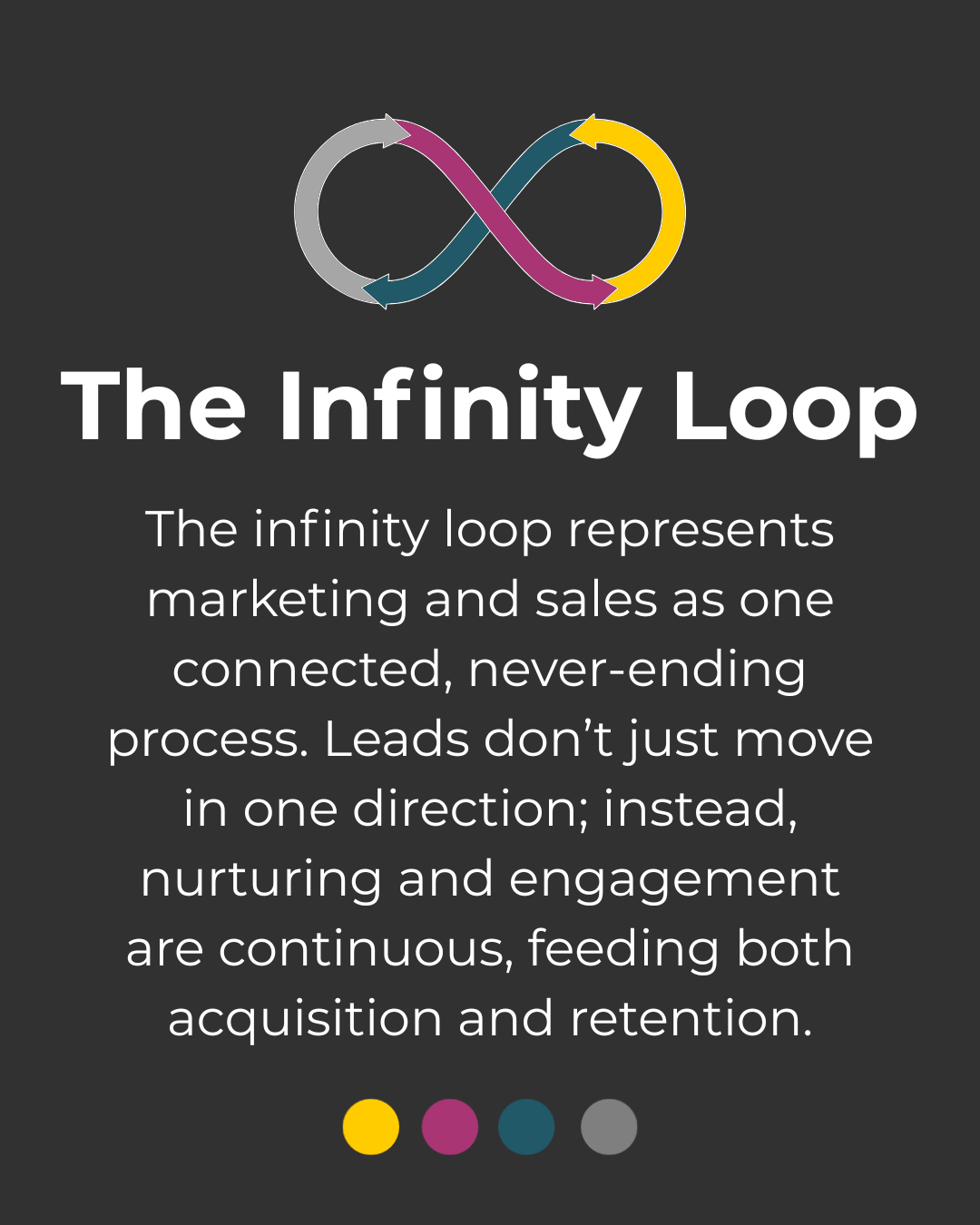
- The Infinity Loop: The infinity loop represents marketing and sales as one connected, never-ending process. Leads don’t just move in one direction; instead, nurturing and engagement are continuous, feeding both acquisition and retention.
But here’s the problem: they don’t reflect the senior living customer journey.
Choosing a senior living community is not the same as buying a new pair of shoes or subscribing to a streaming service. Families and future residents move through a deeply emotional, high-stakes decision.
The journey is long, nonlinear, and involves multiple decision-makers.
While the funnel says leads “drop through” to conversion, in reality, prospects bounce back and forth between awareness, research, touring, and sometimes even ghosting before they reappear months later.
That’s why traditional models miss the mark. Senior living marketing requires a strategy framework built on empathy, patience, and consistent nurturing.
One Quick Way to Power Through a Smart Strategy
So how do you carve out the time and space for strategy when you’re already maxed out?
Here’s a simple idea inspired by sales teams: The Power Hour.
Sales leaders have used this for decades… a strategically planned hour blocked on their calendar where the only focus is outbound calls. No distractions, no excuses. Just dedicated time to move the pipeline forward.
Now imagine if you applied that same concept to your marketing strategy.
- One hour where you and your team step away from the noise.
- No ad dashboards. No email notifications. No new “urgent” requests.
- Just focused, intentional time to align on strategy.

Call it your Marketing Power Hour.
In that hour, you’re not reacting… you’re planning. You’re building the foundation that makes every tactic more effective.
Why 90 Days Beats 12 Months: The “12 Week Year” Approach
Here’s where it gets even smarter. Instead of mapping out a 12-month marketing plan that ends up sitting in a drawer, shrink your planning window.
The book The 12 Week Year popularized this concept: focus on what you can achieve in 90 days, not 365.
It’s short enough to keep urgency high and long enough to see meaningful results.
For senior living operators, this approach is gold. Markets shift, occupancy goals evolve, and leadership changes. It’s hard to plan a year out.
But a 90-day action plan? That’s doable.
What Goes Into a Strong 90-Day Strategy
When you sit down for your Marketing Power Hour, here’s what you need to map out for the next 90 days:
Sub Heading

Sub Heading

Sub Heading

Sub Heading
1. Audience & Message Alignment
- Who are you targeting—independent living, assisted living, memory care, or all three?
- What matters most to those audiences right now—safety, amenities, cost transparency, or family peace of mind?
- How does your message stand out from the competitor down the street?
2. Clarity on Your Offer
- What’s the call-to-action you want prospects to take? Schedule a tour? Download a guide? Call the community directly?
- Is your offer clear, valuable, and easy to find?
3. Tactical Channels to Focus On
- Choose your top 2–3 channels for the quarter.
- Examples: Google Ads + SEO, Facebook Ads + Content, Marketing Automation + Website Optimization.
- Go deep, not wide.
4. Measurements to Guide Success
- Define KPIs that matter. (Hint: not just clicks and impressions).
- Look at qualified inquiries, tours scheduled, and conversions to move-ins.
- Align your marketing metrics with your sales team’s pipeline.
This simple framework ensures you’re not just “doing more marketing” but actually building a strategy that drives occupancy.
Need Help? Introducing Marketing Power Hour by SGD
If reading this has you thinking, “This sounds great, but when would I ever find the time?”—that’s exactly why we built a new program called Marketing Power Hour.
It’s designed for senior living leaders who know they need a strategy but can’t carve out the space to create it.
Here’s how it works:
- One Hour. We meet virtually with your team for a focused, no-fluff session.
- One Framework. We guide you through audience, offer, channels, and measurement.
- One Plan. You walk away with a clear 90-day action plan you can actually execute.
No endless decks. No buzzwords. Just a smart strategy that gives your marketing direction and confidence.
Because at the end of the day, marketing must move the needle on what matters most—helping families choose your community and driving move-ins.
Final Thoughts
Senior living marketing is only getting more complex—more tech, more tactics, more pressure to deliver. But complexity doesn’t have to mean chaos.
With a strategy-first approach, a focused 90-day plan, and a dedicated Marketing Power Hour, you can cut through the overwhelm and get back to what really matters: filling your communities with the right residents.
So here’s your challenge: block that hour. Start building the strategy that makes every marketing dollar work harder. And if you need a partner to guide you through it? Well, that’s what we’re here for.
At Smart Girl Digital, we don’t just “do digital.” We help senior living operators own their strategy, amplify their message, and accelerate move-ins.