

The senior living industry continues to evolve rapidly, and 2025 is poised to bring new challenges and opportunities for marketing leaders. With shifting demographics, heightened competition, and rising consumer expectations, data-driven decisions are no longer optional—they’re essential.
Reporting and analytics are the foundation for making the right choices, optimizing campaigns, and driving measurable results. Senior living marketing leaders must have a handle on their data in order to make informed decisions to impact occupancy.
In this article, we’ll explore the key marketing KPIs that senior living marketers must monitor to stay competitive and ensure success in 2025.
The State of Senior Living Marketing in 2025
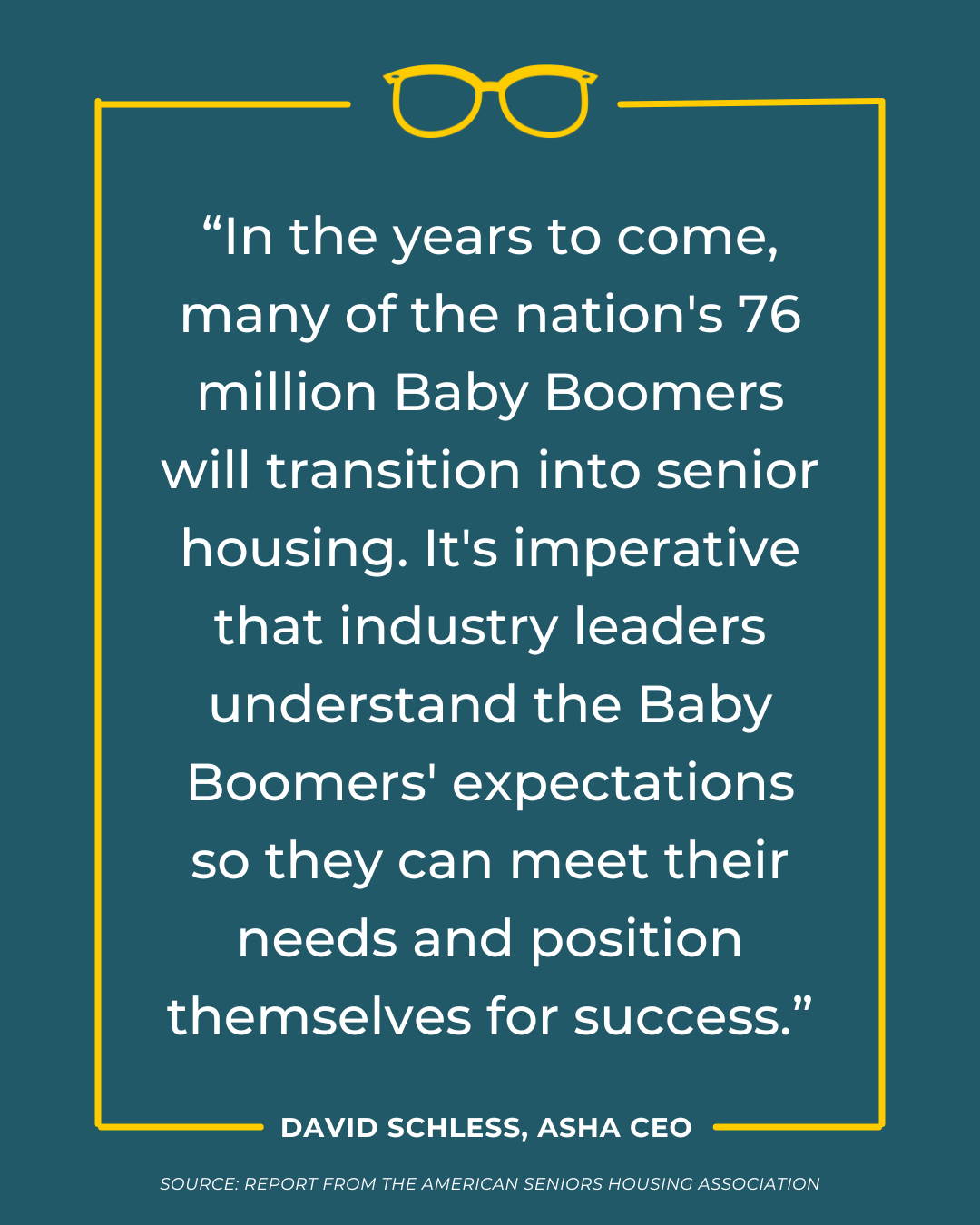
The senior living market has entered a transformative phase, influenced by several factors:
- Demographic Shifts: Gen X and Millennials are increasingly becoming the key influencer in senior living decisions. Baby Boomers remain the primary target audience. Therefore, marketing efforts must cater to both groups with tailored messaging and strategies.
- Consumer Expectations: Prospective residents and their families now demand more personalized, transparent, and timely information. Specifically, digital touchpoints are often the first step in their journey…but not the last.
- Competitive Landscape: The growth of new senior living communities means there are more options for consumers and fiercer competition for marketers. As a result, differentiating your brand is more important than ever.
In this environment, keeping a pulse on the performance of your marketing strategy is critical to success. Accordingly, smart senior living marketers must be monitoring the right KPIs and leveraging robust analytics tools.
Now, let’s dive into those KPIs…
Key Marketing KPIs for Senior Living Marketers

As a senior living marketer, your goals are to drive qualified inquiries to the community sales teams, nurture existing leads in the database, promote on-site events, and support the sales cycle with the right content at the right time.
Therefore, senior living marketers need to focus on KPIs that align with their business objectives and directly impact occupancy rates. Below are the essential KPIs to monitor in 2025:
Lead Acquisition Metrics
- Cost Per Lead (CPL): Understanding how much it costs to generate an inquiry across different channels (e.g., Google Ads, social media) helps allocate budgets effectively.
- Lead Source Performance: Identifying which platforms (e.g., Google Ads, Facebook, direct website traffic) yield the highest-quality leads ensures optimal channel utilization.
- Landing Page Conversion Rates: Evaluating how well landing pages convert visitors into leads can guide ongoing optimization efforts.
Engagement Metrics
- Click-Through Rate (CTR): For ads, email campaigns, or website CTAs, the CTR reveals how compelling your content is.
- Time on Page and Bounce Rates: These metrics gauge how effectively your website retains visitors and engages them with valuable information.
- Social Media Engagement Rate: Monitoring interactions like likes, shares, and comments helps refine content strategies for better audience connection.
- Email Open Rates: Evaluates how effective your email subject lines are piquing interest to win the open in a crowded inbox.
Brand Health Metrics
- Net Promoter Score (NPS): Gauging resident and family satisfaction helps maintain a strong reputation.
- Online Review Sentiment: Monitoring reviews on platforms like Google, Facebook, and senior living directories provides insights into public perception.
- Brand Share of Voice: Analyzing how often your brand is mentioned compared to competitors helps track market visibility.
Digital Advertising ROI
- Return on Ad Spend (ROAS): Determining the profitability of digital ad campaigns ensures smart investment decisions.
- Cost Per Move-In (CPMI): Calculating the total cost to acquire a new resident, including marketing and sales expenses, provides a clear picture of ROI.
Lead Nurturing and Sales Metrics
- MQL to SQL Conversion Rate: This measures how efficiently marketing qualifies leads for the sales team.
- Inquiry-to-Tour Conversion Rate: This can help gauge how qualified your sales leads are as well as the sales team’s effectiveness at scheduling visits for prospective families.
- Tour-to-Move-In Conversion Rate: Assessing the success rate of in-person tours in converting prospects into residents helps improve the experience.
- Average Sales Cycle Length: Tracking the time it takes for a lead to move through the funnel provides insights into pipeline efficiency.
To learn more about marketing metrics, read “Marketing Metrics that Matter for Senior Living Operators” on our blog.
Essential Reporting Tools for Senior Living Marketers

Tracking and analyzing KPIs effectively requires the right tools. Here are some must-have platforms:
- Google Analytics 4 (GA4): With advanced tracking and attribution capabilities, GA4 helps marketers understand user behavior across the website.
- CRM and Marketing Automation Tools (e.g., HubSpot, ActiveDEMAND, Salesforce, etc): These platforms consolidate data, automate follow-ups, and provide robust reporting.
- Social Listening Tools (e.g., Sprout Social, Brandwatch): These tools monitor online conversations and sentiment to provide valuable insights into your brand’s reputation.
In addition, consider how you compile your marketing data into dashboards that give your team and leadership real time access to your data and metrics.
Marketing dashboards should be measuring more than sales metrics.
Lead source attribution is step one. But, crafting and understanding the impact of all channels on your lead volume takes reporting to the next level.
Ultimately, multi-touch attribution along the entire customer journey can unlock insights to help senior living marketers better allocate and advocate for budget decisions.
Challenges & Solutions in Data-Driven Marketing
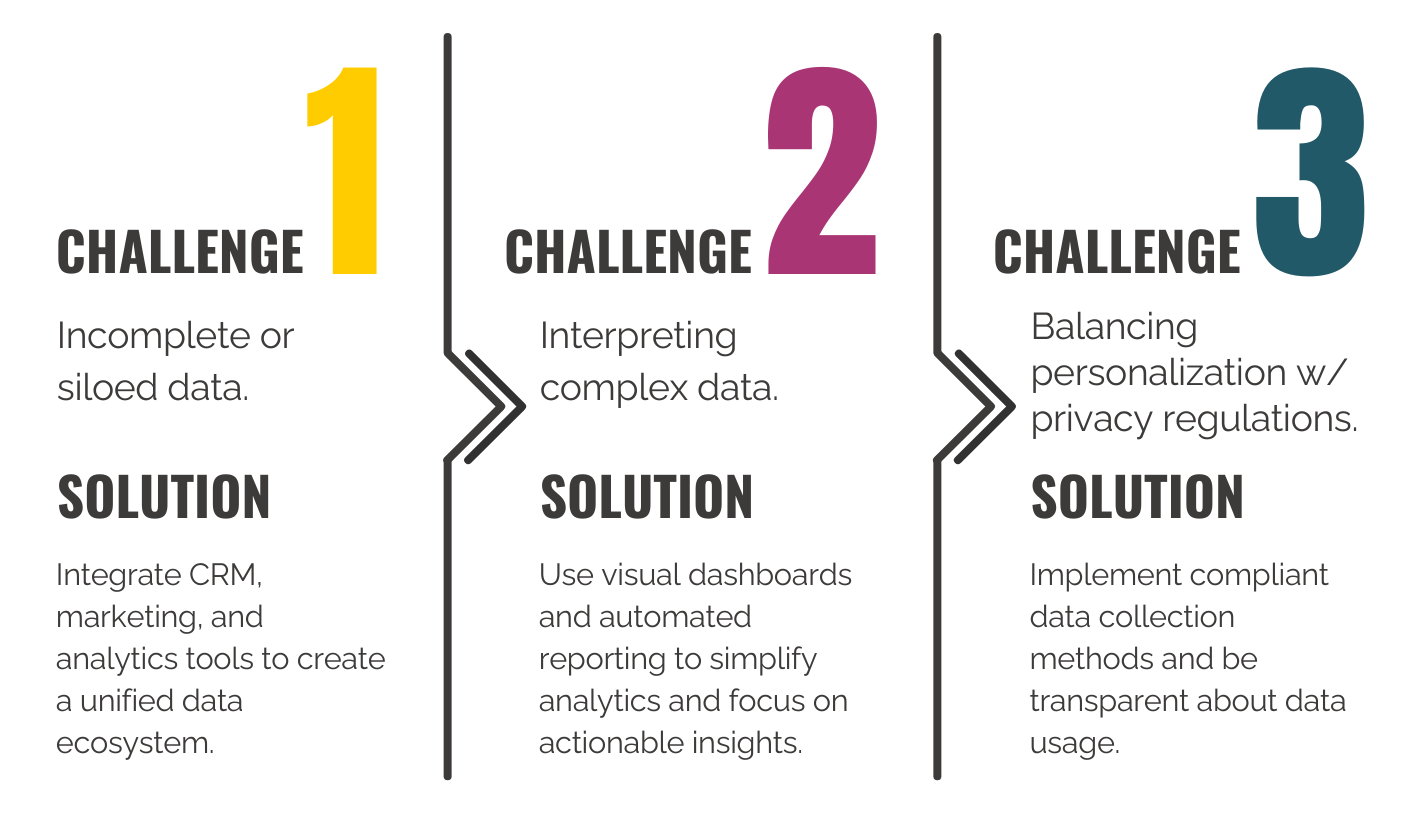
While data-driven marketing offers immense potential for senior living marketers, it also comes with challenges:
- Challenge 1: Incomplete or siloed data.
- Solution: Integrate CRM, marketing, and analytics tools to create a unified data ecosystem.
- Challenge 2: Interpreting complex data.
- Solution: Use visual dashboards and automated reporting to simplify analytics and focus on actionable insights.
- Challenge 3: Balancing personalization with privacy regulations.
- Solution: Implement compliant data collection methods and be transparent about data usage.
Investing time in understanding how to solve these data challenges can shed light on how well (or not) your marketing strategy is working. A technical review and audit of your MarTech stack can unlock new ideas and areas of opportunity for how data flows between your systems so you can build reporting dashboards that drive solid business decisions.
7 Actionable Reporting Tips for Senior Living Marketing Leaders
To maximize the impact of reporting and analytics in 2025, consider the following tips:
- Review Marketing Metrics Monthly: Set a regular monthly schedule to look at key marketing metrics to understand how your strategy is delivering results.
- Conduct Regular Audits: Bi-annual audits can be a deep dive review of your strategy, KPI metrics, and benchmark data to ensure your analytics setup is accurate and aligned with your current goals.
- Focus on Actionable KPIs: Avoid vanity metrics (social followers, likes, and comments) and prioritize those that directly impact your bottom line (MQL-to-SQL conversions, Total Inquiries, etc).
- Align KPIs with Business Goals: Make sure marketing KPIs support overall objectives, such as occupancy rates and revenue growth. Share the data between departments so sales, marketing, and operations can work together to reach your goals.
- Use integrated systems. Make sure your marketing tech stack is fully integrated with bi-directional data sharing with your sales systems. Operators should own the platform and access points for all digital systems (including, but not limited to your website platform, analytics platforms, paid ads accounts, automation platforms, and any tools/API connections between the tools).
- Train Your Team: Invest in your team so they have the skills to interpret data, apply insights effectively, and work with your marketing partners more strategically. Find professional development opportunities for your team to learn more about digital marketing best practices, tactical execution that can be brought in-house, and tools to help your in-house team make a stronger impact on your bottomline.
- Design Your Marketing Reporting Dashboard. Create a reporting dashboard system that works for your organization and marketing strategy. This will allow you to have one place to see all the top-level KPIs without cobbling together reports and notes from several systems. You can always dig deeper into the data when you need to, but a dashboard can streamline your monthly reporting processes.
With That Said...
The senior living industry’s success will hinge on marketers’ ability to harness the power of analytics and track the right KPIs.
By staying data-driven and proactive, senior living marketers can ensure their strategies meet the demands of a competitive landscape while delivering meaningful results. Embrace these insights and set your community up for long-term success.
Are you ready to optimize your marketing strategy?
Download the Senior Living Marketing Audit Checklist and uncover actionable insights to optimize your digital presence, attract more leads, and boost occupancy rates.
Inside you’ll find metrics to review your:
- Website Performance
- SEO and Content Strategy
- Paid Ads ROI
- Reputation Management
- Email Marketing and Automation