

Senior living operators face increasing pressure to grow occupancy rates and generate high-quality leads — all while minimizing costs. Many communities have traditionally relied on third-party referral companies to fill vacancies, but this approach is becoming less sustainable. Senior living marketing funnel
Third-party referrals often come with high fees (ranging from 50% to 100% of a resident’s first month of rent) and inconsistent lead quality.
Additionally, operators have little control over the prospect’s journey through the sales process when working with referral agencies.
To build a sustainable and scalable pipeline of high-quality leads, senior living operators must take charge of their marketing strategy — and that starts with a well-designed digital marketing funnel.
A smart senior living marketing funnel allows you to engage potential residents and their families directly, nurture them through the decision-making process, and convert them into long-term residents.
In this article, we’ll outline how to create a high-converting digital marketing funnel for senior living communities, including:
- Three reasons to reduce reliance on third-party referrals
- Targeting the right audience at the right time (…understanding MQLs vs SQLs)
- Choosing the right type of funnel (…the difference between a sales funnel and marketing funnel)
- Crafting a high-value offer that attracts qualified leads
- Setting up the technical infrastructure to capture and track leads effectively
- Designing an automated and personalized follow-up process
- Continuously optimizing performance based on data and feedback
Let’s dive in.
Why Reducing Reliance on Third-Party Referrals is Critical

The senior living industry has traditionally relied heavily on third-party lead generation companies like A Place for Mom, Caring.com, and SeniorAdvisor.com. While these platforms can deliver leads, the drawbacks are significant:
- High Costs: Referral fees typically range from 50% to 100% of the first month’s rent, which can quickly erode profitability.
- Low Conversion Rates: Industry data shows that leads from third-party referral services have conversion rates between 1% and 2% — significantly lower than direct inquiries.
- Lack of Control: When working with third-party services, you often have little control over the messaging, timing, and overall customer experience.
The goal of a smart digital marketing funnel is to bring lead generation in-house — reducing dependency on outside sources and building a sustainable pipeline of high-quality, engaged prospects.
Understanding Marketing Qualified Leads (MQL) vs. Sales Qualified Leads (SQL)
Not all leads are created equal. It’s important to understand the distinction between Marketing Qualified Leads (MQLs) and Sales Qualified Leads (SQLs) to ensure that the right leads are sent to the sales team at the right time.
Marketing Qualified Lead (MQL):
- An MQL is a lead that has shown interest in your community but is not ready to talk to sales yet.
- Indicators of an MQL:
- Download a brochure or guide
- Attended a webinar
- Engaged with email content
Sales Qualified Lead (SQL):
- An SQL is a lead that has shown clear intent to move forward with the decision-making process.
- Indicators of an SQL:
- Requested a tour
- Completed a Contact Us form
- Asked to speak with a sales representative
👉 Key Strategy: Ensure that MQLs and SQLs are properly
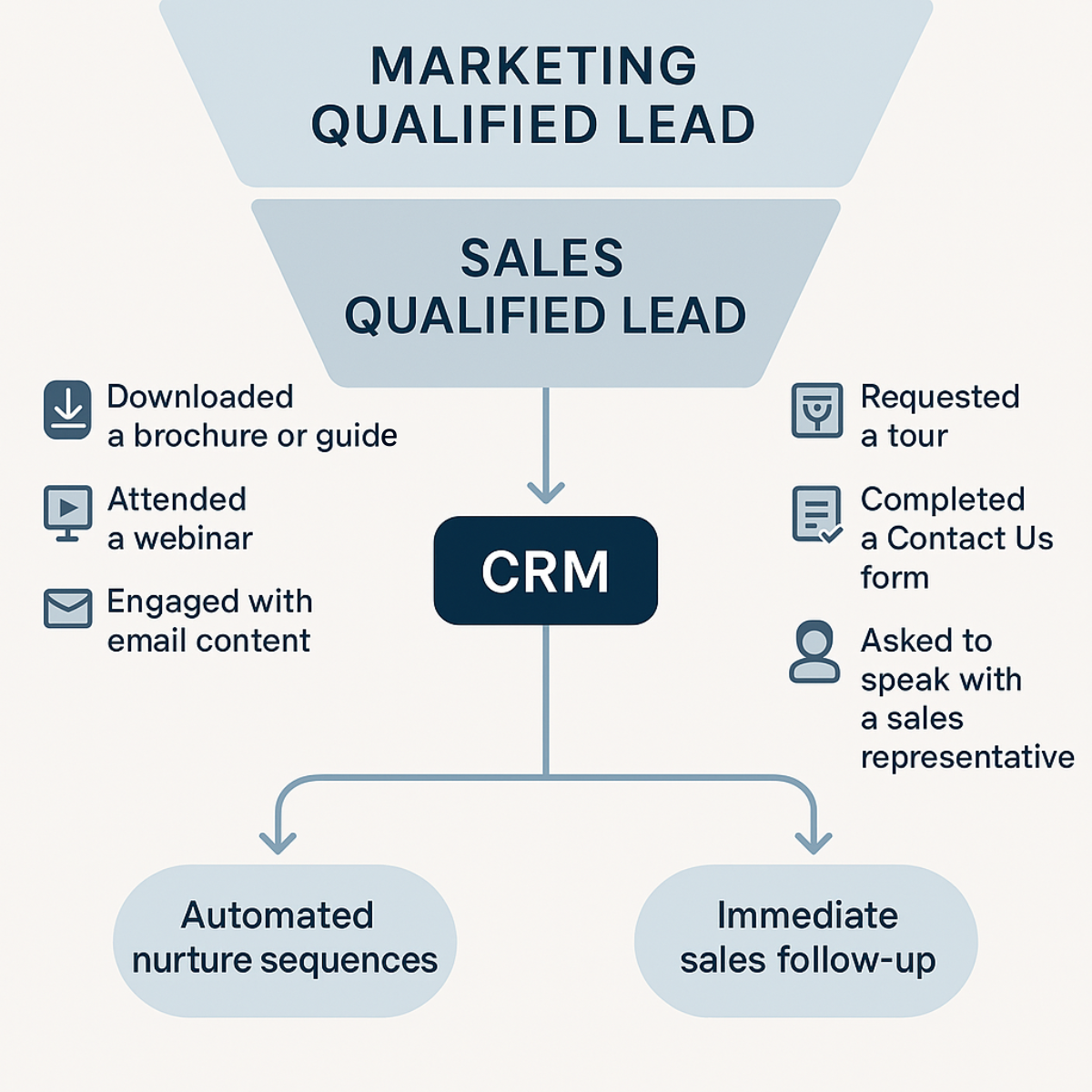
segmented in your CRM. Develop automated nurturing sequences for MQLs and trigger immediate outreach for SQLs.
Difference Between a Marketing Funnel and a Sales Funnel
While the marketing funnel and sales funnel are connected, they serve distinct purposes: senior living marketing funnel
Marketing Funnel:
-
- Focus: Attracting and educating potential customers
- Goal: Build trust, deliver value, and increase brand awareness
- Example Tactics: Content marketing, social media, email campaigns, PPC
Sales Funnel:
-
- Focus: Converting leads into tours and residents
- Goal: Move prospects from consideration to decision
- Example Tactics: Personal follow-ups, sales calls, in-person tours, and sales enablement campaigns to reinforce your sales process
👉 A seamless handoff between the marketing and sales funnel is essential for optimizing lead conversion rates.
4 Parts Of A Successful Funnel
Now that we understand why you develop a digital funnel, the audience stage of the journey, and the type of funnel to meet your goals, let’s look at this 4-step process for building your senior living digital sales funnel. senior living marketing funnel
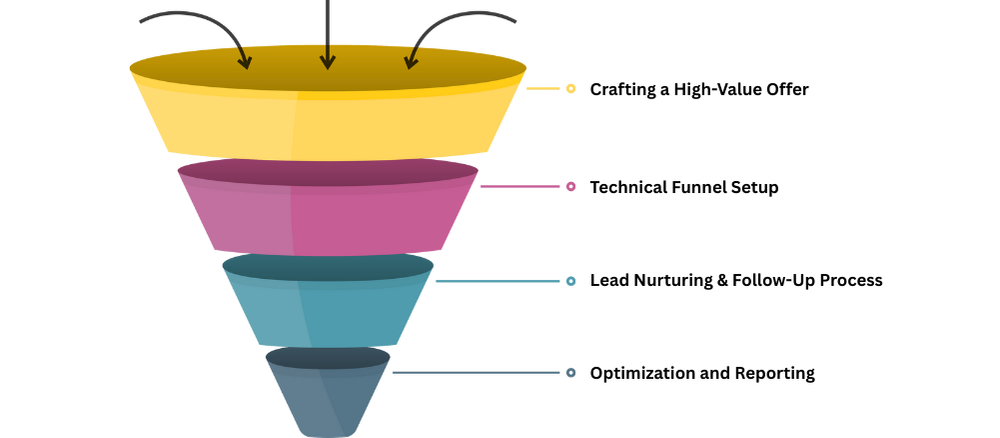
1. Crafting a High-Value Offer
The foundation of any successful funnel is a compelling offer that speaks directly to the needs and concerns of your audience. A strong lead magnet will motivate potential residents (or their families) to take action and enter your sales funnel.
Understanding What Motivates Senior Living Prospects
Prospects typically have a mix of emotional and practical concerns, including:
-
- Cost and affordability
- Health and wellness
- Safety and security
- Social engagement and community
- Lifestyle and amenities
To create a compelling offer, you need to address one or more of these motivators.
Examples of High-Performing Lead Magnets:
1. Virtual Tours – According to research, 73% of consumers prefer to learn about a product or service through video (Wyzowl). These immersive experiences give prospects a low-pressure way to explore your community and envision themselves living there.
However, virtual tour sign-ups may not be ready to speak to a sales person. Consider these leads as MQLs.
2. Cost Comparison Worksheets – Cost is one of the biggest concerns for prospective residents and their families. Offering a transparent comparison of your pricing versus home care or other senior living options builds trust and positions your community as a financially smart choice.
Cost comparison sign-ups are closer to a buying decision, but until they directly reach out, consider these leads MQLs.
3. Decision-Making Guides for Families – Adult children often play a significant role in the decision-making process. Providing a guide that outlines key factors, questions to ask, and how to evaluate senior living options will position your community as a trusted resource.
Any guide or ebook of information (including your digital brochure) should be considered an MQL as these leads are typically earliest in their research of community options.

4. Lifestyle Assessments – A short quiz that helps potential residents determine which type of senior living community suits their needs can create engagement and provide valuable data for your sales team.
Roobrik has an excellent tool that guides families through a series of questions along with a strong CTA to encourage these MQL leads to connect with the community team – quickly converting them to SQLs.
Leads who complete any multi-step form or set of questions are highly engaged and could be treated as SQLs depending on the questions.
5. Exclusive Events – Invite prospects to in-person or virtual events, such as open houses or Q&A sessions with current residents. According to the National Center for Assisted Living (NCAL), 64% of prospective residents make a decision based on an in-person visit.
Leads who sign up to attend an event are ready to visit the community are SQLs taking next steps to determine the best option for their family.
👉 Remember: Your high-value offer needs to be compelling and provide the right information for your audience at the specific moment of their journey. Do the work to map the right offer for each stage of the customer journey.
2. Technical Funnel Setup
Creating a seamless user experience is essential for a high-converting funnel. If the process is complicated or disjointed, potential leads will drop off before converting.
Landing Pages
-
- Create a dedicated landing page for each offer.
- Keep the design simple, focused, and distraction-free.
- Include a clear headline, brief supporting text, and a single, strong call-to-action (e.g., “Download Your Brochure,” “Schedule Your Tour Today”).
- Make sure the form on your landing page is above the fold (so no one needs to scroll to find it)
- Use mobile-friendly designs, as 60% of senior living website traffic now comes from mobile devices (Blossom Strategies).
Forms
-
- Keep forms short — no more than 3 to 5 fields.
- Focus on essential information (name, phone, email, preferred contact time).
- Use progressive profiling to gather more data over time within your marketing automation platform.
- Determine if your incoming leads should automatically post to your CRM or if you will manage MQLs in your marketing database until they are qualified.
Thank You Page
-
- Design a funnel thank you page where new leads are sent after they fill out the form.
- Craft “next step” messaging or videos to reinforce their decision to opt-in to your offer.
- Provide any resource download links on this page (and tell them to check their inbox for more information)
- This page will help to continue the conversation, let them know next steps, and provide some additional tracking options for your analytics.
Tracking & Analytics
-
- Design a plan in your CRM and marketing platform for how you intend to track success of this new funnel.
- Set up Google Tag Manager to track button clicks, video plays, and form submissions.
- Use UTM codes on all links to monitor traffic sources and performance.
- Set up conversion tracking in Google Analytics and Facebook Ads Manager to keep up with how many leads come from your digital efforts.
- Set up Key Performance Indicators (KPIs) for total number of opt-ins, conversions from MQL to SQL, and lead scoring for your new leads.
👉 We must measure what we expect. No funnel is complete without proper tracking in place. Think about your lead data flow early in the process to help with measuring success when the funnel is live.
3. Lead Nurturing & Follow-Up Process
Leads are valuable — but only if you follow up promptly and nurture them through the decision-making process. Studies show that leads contacted within 5 minutes are 100x more likely to convert than leads contacted after 30 minutes (Lead Response Management).
Automated Email Sequences:
- Welcome Email: Thank them for their interest and share helpful content.
- Education Series: Provide value with content like “5 Signs It’s Time to Consider Senior Living.”
- Testimonials and Social Proof: Share resident stories and reviews.
- Action-Oriented CTA: Encourage a tour or call.
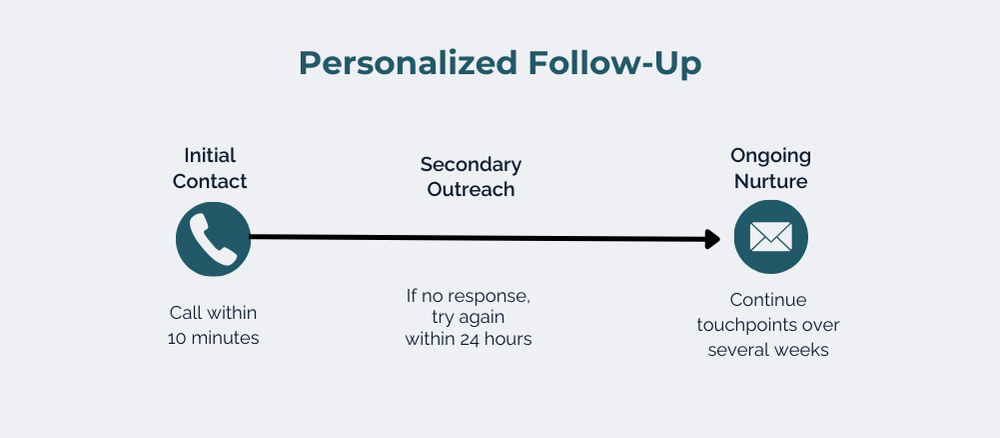
Personalized Follow-Up:
- Initial Contact: Call within 10 minutes of receiving a lead.
- Secondary Outreach: If they don’t respond, try again within 24 hours.
- Ongoing Nurture: Continue touchpoints over several weeks.
Align your marketing communication follow up touchpoints (like emails and SMS text messaging) with your sales team’s follow up process.
👉 Remember, marketing’s job is to reinforce the sales process. You will want your automated sequences to encourage conversations, provide valuable content, and keep your community top of mind.
Need help knowing where to start? Ask Smart Girl about our proven Senior Living Marketing Automation Campaign Frameworks.
4. Optimization and Reporting
A great funnel is never truly finished — you need to continually test and refine based on data and feedback. Create a system for reviewing your funnel metrics and making changes one at a time to fine tune your funnel’s success.
A/B Testing:
-
- Test different headlines, images, and CTAs.
- Test form length and design.
- Test different offer types (virtual tour vs. free guide).
- Only test one variable at a time (like a scientific experiment)
Performance Tracking:
-
- Monitor conversion rates, cost-per-lead, and time-to-conversion.
- Review which ad platforms and campaigns generate the best ROI.
- Build a dashboard that allows you to see the metrics that gauge your funnel’s performance.
👉 Always Be Optimizing. Only optimizing based on statistically significant data. Allow your funnel to be live for a minimum of 30 days, spend a minimum of $1,000, and have traffic to your landing page that exceeds 1,000 visits.
Conclusion
A well-crafted senior living marketing funnel can significantly reduce your reliance on third-party referral companies, increase lead quality, and boost occupancy rates.
By focusing on high-value offers, precise audience targeting, and consistent follow-up, senior living operators can build a sustainable, high-converting sales pipeline.
Taking control of your lead generation strategy means increased profitability, improved resident satisfaction, and long-term growth. It’s time to stop relying on external sources — and start building a smarter, more effective sales funnel today.
👉 Need help with your senior living marketing strategy? Smart Girl Digital can help. Contact us to get started!